The Mexican music world mourns
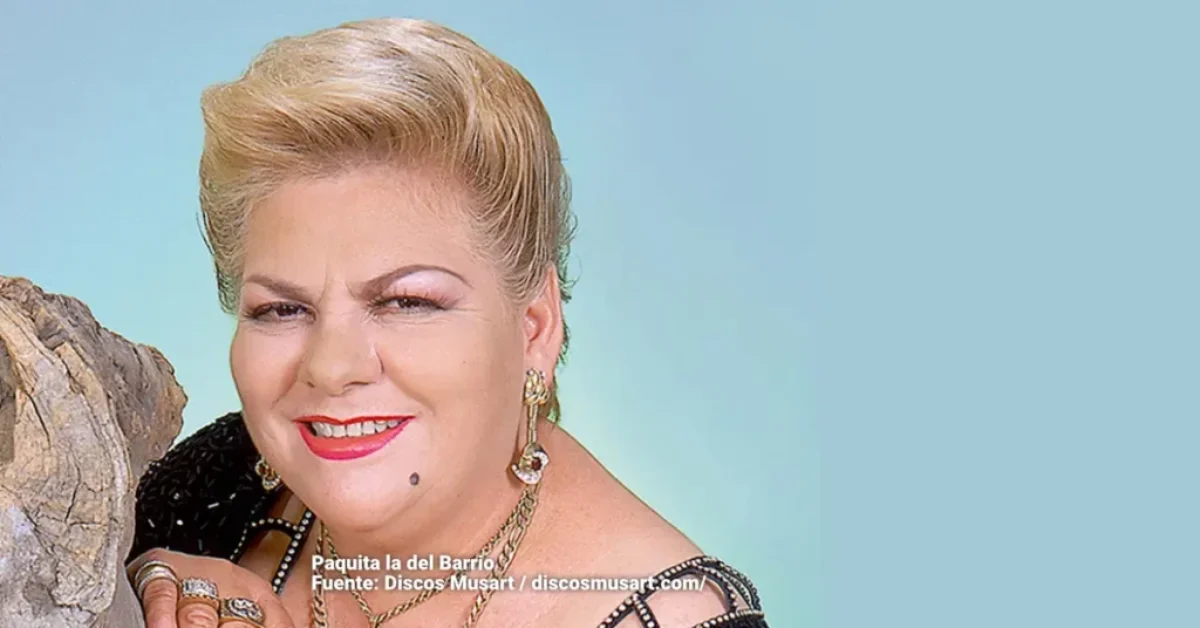
Paquita la del Barrio, the world of Mexican music mourns the passing of Francisca Viveros Barradas, known artistically as Paquita la del Barrio, at the age of 77 today, February 17, 2025, in her home in Veracruz. Her departure leaves a void in the ranchero and popular Mexican music genres, where her voice and presence became symbols of the fight against machismo and in defense of women.
Early years and musical beginnings
Born on April 2, 1947, in Alto Lucero, Veracruz, Paquita grew up in a humble family. From an early age, she showed an inclination for music, participating in school festivals and local events. At the age of 15, she moved to Mexico City in search of better opportunities, facing multiple challenges in an unfamiliar metropolis.
In the capital, together with her sister Viola, she formed the duo “Las Golondrinas,” performing in small venues and restaurants. However, it was in 1978 when she opened her own restaurant, “Casa Paquita,” in the Guerrero neighborhood, where she began to gain recognition by singing songs that resonated with the experiences and feelings of many women.
Rise to fame and musical legacy
Paquita’s career took off in the 1980s when her music started to spread beyond the limits of Mexico City. With a powerful voice and direct lyrics, her songs addressed themes of heartbreak, betrayal, and female empowerment. Songs like “Rata de dos patas,” “Tres veces te engañé,” and “Cheque en blanco” became anthems for those seeking to express their pain and resilience in the face of romantic adversities.
Although many of her songs seemed to be aimed at unfaithful men, Paquita always emphasized that her intention was to denounce macho attitudes and give a voice to women who had suffered in silence. Her frank and unfiltered style earned her both admirers and detractors, but she undoubtedly left an indelible mark on Mexican music.
Recognitions and artistic career
Throughout her career, Paquita received numerous recognitions. In 2021, she was awarded the Billboard Lifetime Achievement Award during the Billboard Latin Music Awards, highlighting her contributions to the development of Latin music worldwide. This recognition was a testament to her impact and legacy in the music industry.
In addition to her role as a singer, Paquita ventured into acting, participating in telenovelas and television programs, where her authentic and charismatic personality made her stand out. Her life was also brought to the screen in a biographical series in 2017, where her personal and professional challenges were explored, revealing the woman behind the artist.
Personal life and later years
Paquita’s personal life was marked by challenges and tragedies. At the age of 15, she married Miguel Gerardo, an older man who turned out to be married to another woman, leading to a deep disappointment. Later, she married Alfonso Martínez, with whom she shared more than three decades until his death in 2001. Despite the adversities, Paquita found in music a way to express her experiences and connect with her audience.
In her later years, she faced health issues that led her to cancel performances and reduce her artistic activity. In early 2025, she postponed a concert at the National Auditorium due to complications in her legs that made mobility difficult. Despite these challenges, she always maintained a positive attitude and gratitude towards her followers.
Legacy and farewell
Paquita la del Barrio’s departure leaves an unforgettable legacy in Mexican music. Her voice and songs continue to be references for those seeking to express feelings of heartbreak and empowerment. Her bravery in addressing taboo topics and her unwavering defense of women made her a cultural icon.
In her honor, it is expected that tributes and homages will be held to celebrate her life and work, remembering a woman who, through her art, transformed pain into strength and adversity into inspiration. Paquita la del Barrio will be remembered not only for her music but for her unyielding spirit and dedication to giving a voice to those who had none.