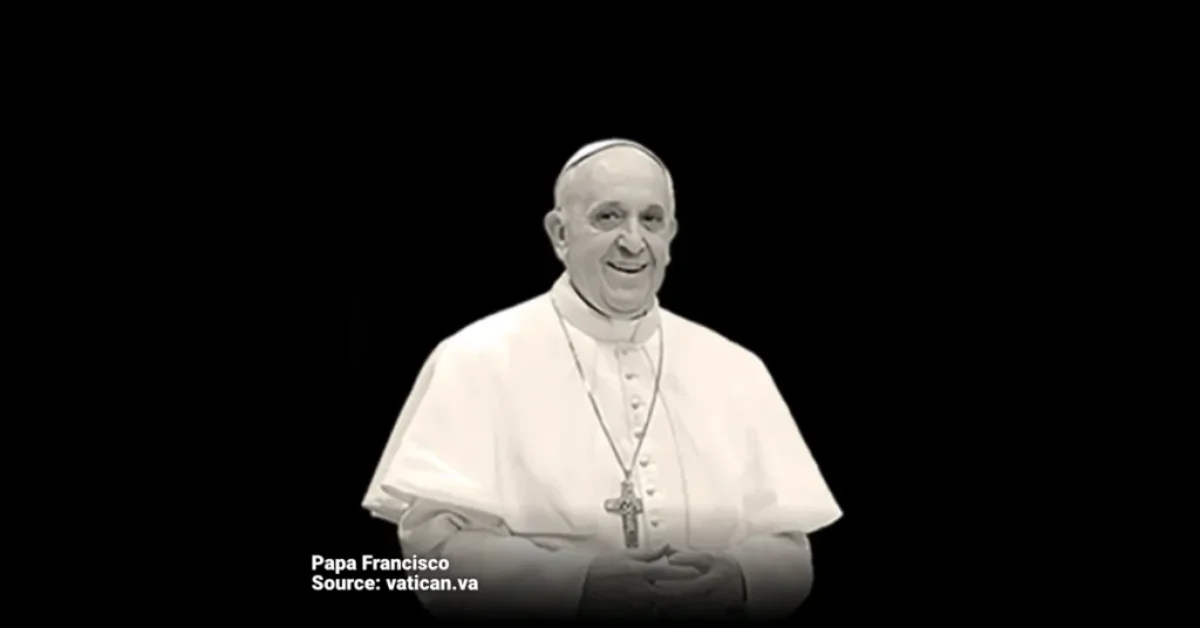
Vatican City, April 21, 2025 – The Catholic world and the international community are mourning the death of Pope Francis, who passed away at the age of 88, leaving behind a legacy of reforms, openness, and a revolutionary approach to global challenges. His pontificate, which began in 2013, marked a turning point in the history of the Holy See, with profound changes in the Vatican structure and a firm stance on social issues.
A Pontificate of Reforms and Controversies
Born Jorge Mario Bergoglio in Buenos Aires, Argentina, Francis was the first Jesuit pope and the first from America. From his election, he promoted a “poor church for the poor,” prioritizing humility and closeness to the marginalized. Among his main contributions are:
- Vatican financial reform: He created the Secretariat for the Economy and subjected Vatican finances to international transparency standards after years of scandals like the Vatileaks case.
- Focus on migrants and refugees: He tirelessly defended the rights of the displaced, calling their suffering a “wound in humanity.”
- Integral ecology: His encyclical Laudato Si’ (2015) became a reference for the global environmental movement, urging the protection of the “common home.”
- Openness to divorced people and the LGBTQI+ community: Although he maintained traditional doctrine, he promoted a more inclusive approach with phrases like “Who am I to judge?” generating both hope and criticism within the conservative curia.
Changes in the Vatican State
Francis not only transformed the Church’s message but also its power structure:
- Decentralization: He strengthened local episcopal conferences, reducing centralized control from Rome.
- Fight against abuse: He established stricter norms against clerical pedophilia, although some criticized the measures as insufficient.
- Vatican diplomacy: He mediated international conflicts, from Venezuela to Ukraine, reaffirming the Vatican’s geopolitical role.
International Reactions
World leaders and religious figures have expressed their condolences.
- The Vice President of the United States issued an official statement: “I learned of the pope’s death. My heart is with the millions of Christians worldwide who loved him.”
- The President of Argentina Javier Gerardo Milei said: “Despite differences that today seem minor, having been able to know him in his kindness and wisdom was a true honor for me. As president, as Argentine and fundamentally, as a man of faith, I bid farewell to the Holy Father and accompany all of us who find ourselves with this sad news today. Rest in peace.”
- Mexico’s President Claudia Sheinbaum declared: “A humanist who opted for the poor, peace, and equality.”
- Colombia’s President announced: “He understood perfectly his role as a spiritual leader in the great struggle for life. His encyclicals will go down in history if we are able to build a humanity that defends its greatest good: life. Farewell: Francis.”
- Spain’s Head of Government Pedro Sánchez declared: “I regret the passing of Pope Francis. His commitment to peace, social justice, and the most vulnerable leaves a deep legacy. Rest in peace.”
- France’s President Emmanuel Macron said: “I send words of condolences to Catholics around the world. The pope was a man who always stood by the most vulnerable.”
- Italy’s Prime Minister Georgia Meloni declared: “This news deeply saddens us, as we lose a great man and a great pastor. In the meditations of the Via Crucis, he reminded us of the power of gift, which makes everything blossom again and is capable of reconciling what in the eyes of man is irreconcilable. And he asked the world once more for the courage to change course, to follow a path that ‘does not destroy but cultivates, repairs, guards.’”
- Russia’s President Vladimir Putin said: “Throughout his pontificate, he actively contributed to the development of dialogue between the Russian Orthodox Church and the Roman Catholic Church, and to constructive interaction between Russia and the Holy See.”
- Many other world leaders continue to express their condolences on the sensitive passing of the Holy Father.
What Lies Ahead for the Vatican?
With his death, a conclave begins amidst tensions between reformists and conservatives. His successor will inherit a Church in transformation but with pending challenges: secularization in the West, abuse scandals, and internal polarization.
Pope Francis will be remembered as the Pope who shook the foundations of Catholicism, combining mercy with pragmatism. His phrase “The Church must be a field hospital” summarizes his vision: a faith in motion, serving the forgotten.
Pope Francis’ message is clear: the visibility of the rights of those who have the least in this world, the disadvantaged, migrants, marginalized and discriminated communities, looking outward from the Church and not just inward.
Now more than ever, the number of parishioners is at its lowest in centuries, posing a significant challenge for the next Pope to make Christ’s message reach the younger generation and reconvince people of older ages worldwide.
Rest in peace, Pope Francis.
Sources of information: